juni 9th, 2014

Characteristics of the two types of plastiglomerate. (A) In situ plastiglomerate wherein molten plastic is adhered to the surface of a basalt flow. Field book is 18 cm long. (B) Clastic plastiglomerate containing molten plastic and basalt and coral fragments. (C) Plastic amygdales in a basalt flow. (D) Large in situ plastiglomerate fragment. Adhered molten plastic was found 15 cm below the surface. Note the protected vegetated location.
Recognition of increasing plastic debris pollution over the last several decades has led to investigations of the imminent dangers posed to marine organisms and their ecosystems, but very little is known about the preservation potential of plastics in the rock record. As anthropogenically derived materials, plastics are astonishingly abundant in oceans, seas, and lakes, where they accumulate at or near the water surface, on lake and ocean bottoms, and along shorelines. The burial potential of plastic debris is chiefly dependent on the material’s density and abundance, in addition to the depositional environment. On Kamilo Beach on the island of Hawaii a new “stone” formed through intermingling of melted plastic, beach sediment, basaltic lava fragments, and organic debris. The material, herein referred to as “plastiglomerate,” is divided into in situ and clastic types that were distributed over all areas of the beach. Agglutination of natural sediments to melted plastic during campfire burning has increased the overall density of plastiglomerate, which inhibits transport by wind or water, thereby increasing the potential for burial and subsequent preservation. This anthropogenically influenced material has great potential to form a marker horizon of human pollution, signaling the occurrence of the informal Anthropocene epoch.
According to the geologic timescale, we are currently living in the Holocene epoch. However, Crutzen and Stoermer proposed the term “Anthropocene” in the year 2000 A.D. to represent the period of time between the latter half of the 18th century and the present day. Although other workers have considered the onset of this informal epoch to have occurred at slightly different times, researchers agree that the Anthropocene is a time span marked by human interaction with Earth’s biophysical system. Geological evidence used in supporting this assertion comes from Holocene ice cores and soil profiles. For example, methane concentrations measured in ice cores display an increase of CH4, which contrasts with the expected decline in CH4 at that time, based on the orbital-monsoon cycle theory. Ruddiman and Thomson propose in 2001 A.D. that this anomalous rise in CH4 can be linked to early agricultural practices in Eurasia. In addition, an increase in atmospheric CO2, as determined from ice cores, was explained by Ruddiman in 2003 as a result of early forest clearance.
Atmospheric compositions and soil management practices are only two indicators of anthropogenic activity, but relatively few examples of solid, human-made materials are preserved in the sediment record. Even rarer are items that are correlatable on a global scale. Given the ubiquity of non-degradable plastic debris on our planet, the possibility of their global preservation is strong. This study presents the first rock type composed partially of plastic material that has strong potential to act as a global marker horizon in the Anthropocene.
Based on a text by Patricia L. Corcoran, Charles J. Moore, Kelly Jazvac
Published in The Geological Society of America.
Posted in Anthropology, Ecology, Geology, Oceanography, Petrology | Reacties uitgeschakeld voor Anthropogenic Plastiglomerates
september 3rd, 2012
Michael Johansson
Some Assembly Required – Crescent scale 1:1, 2007
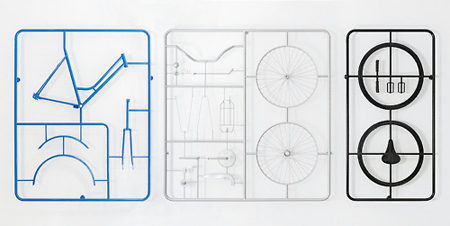
‘As a child I was fascinated by building models. I remember breaking off the pieces from the surrounding plastic sticks that were leftover from the casting process and subsequently gluing the pieces back together in the right order by following the instruction manual. A real bicycle is turned back into a space of imagination’.
Toys ‘r’ us – dinghy scale 1:1, 2006
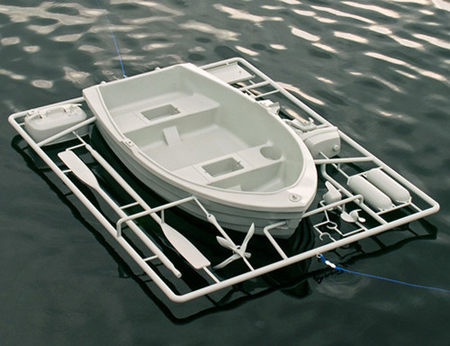
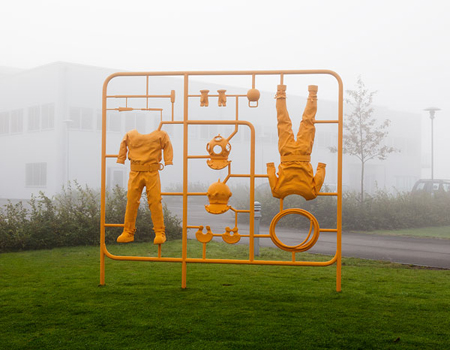
‘A boat and related equipment are joined together in a welded metal frame. everything is painted in a unifying plastic layer to resemble the surface of a model kit. the real boat is transformed into a model of itself, and its original purpose has given way to something else’. Michael Johansson also made other household equipment like a bed, hairdryer and lawn mower. He even made a diving suit!
Some Assembly Required – Hard Hat Diving, 2011
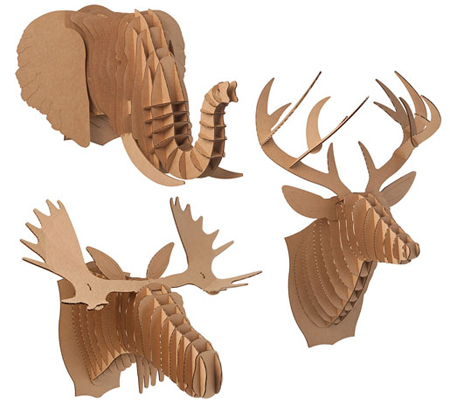
This DIY art makes me think of the DIY trophies of ply beech wood from the designers of Big-Game.
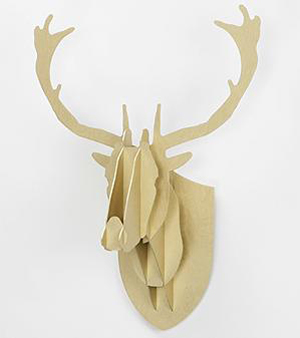
But they also exist in the regular urban design jungle as cardboard models.
Posted in Archaeology, Dendrology, Genealogy, Taxonomy, Visual Arts | Reacties uitgeschakeld voor DIY Art
september 1st, 2012
Sung Kug Kim
Bi-King, 2010
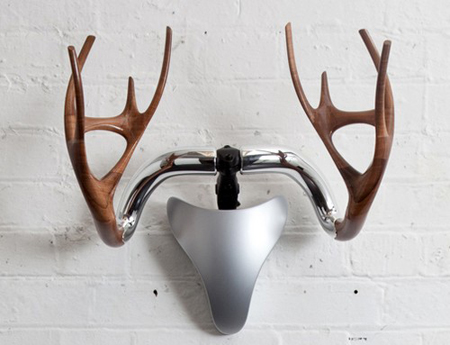
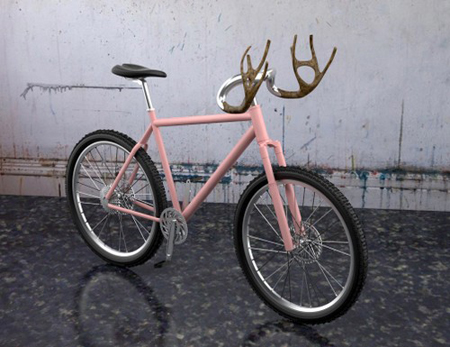
– Artist unknown
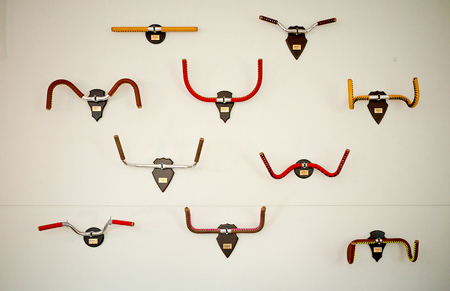
– Artist very known
Pablo Picasso
Bull’s Head, 1942
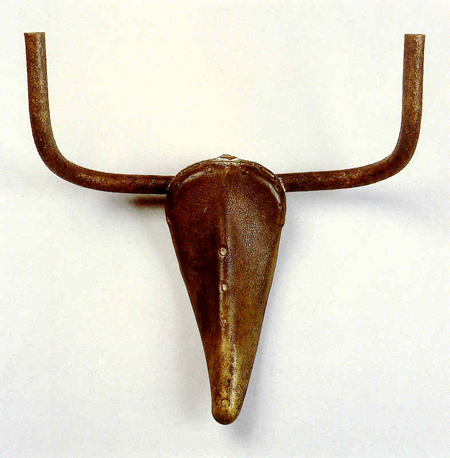
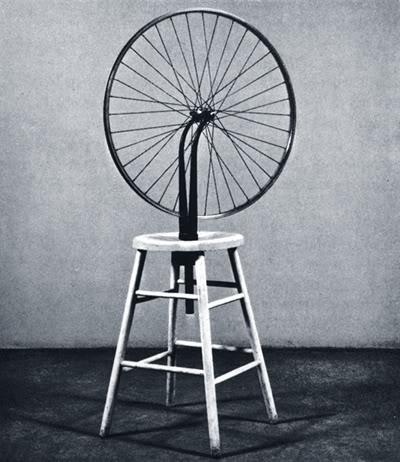
The first readymade was made by Marcel Duchamp in 1913. In his Paris studio he mounted a bicycle wheel upside down onto a stool, spinning it occasionally just to watch it. “I enjoyed looking at it,” he said. “Just as I enjoy looking at the flames dancing in the fireplace.” According to André Breton and Paul Éluard’s Dictionnaire abrégé du Surréalisme, a readymade is “an ordinary object elevated to the dignity of a work of art by the mere choice of an artist.”
Most of his early readymades have been lost or discarded, but years later he commissioned reproductions of many of them…..
Marcel Duchamp
Bicycle Wheel (Roue de bicyclette), 1913
Posted in Taxonomy, Visual Arts, Zoology | Reacties uitgeschakeld voor Readymade Made Already?
oktober 27th, 2011
Leonid Tsvetkov

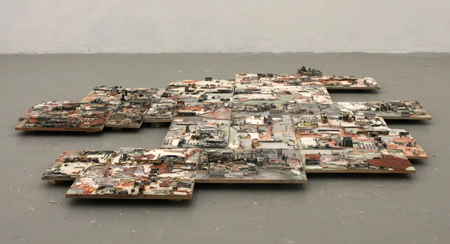
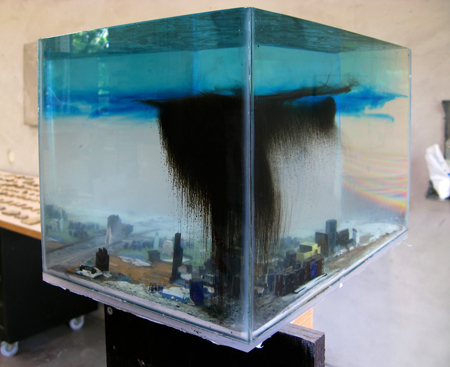
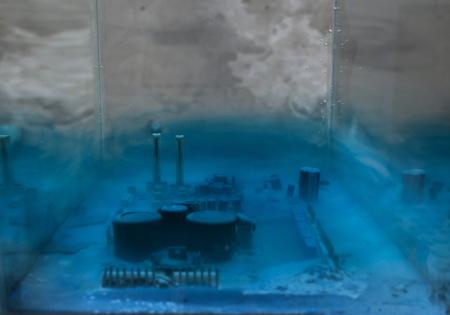
Remnants of our digital discoveries are being dumped worldwide by the millions. After stripping off some valuable metal parts, the left overs are worthless. So called ‘Motherboards’, the main circuit board of a computer have a short life expectancy since new chips are developed with singularitarian speed*. When exposed to a variety of chemical liquids they become alive again. Never before I’ve seen so much beauty in discarded trash. Oil refineries and skyscrapers surround city grids which are overrun by unknown fungi and bacteria. The Russian artist Leonid Tsvetkov creates landscapes which could become ours in a not so distant future, or as he describes it himself: ‘My work focuses on reshaping cultural waste and exploration of social and physical processes. I am interested in the moments where the hard edge geometry of the city becomes organic or there random activity begins to take a highly organized form’.
(*) Technological singularity refers to the hypothetical future emergence of greater-than-human intelligence through technological means. Since the capabilities of such an intelligence would be difficult for an unaided human mind to comprehend, the occurrence of a technological singularity is seen as an intellectual event horizon, beyond which the future becomes difficult to understand or predict. Nevertheless, proponents of the singularity typically anticipate such an event to precede an “intelligence explosion”, wherein superintelligences design successive generations of increasingly powerful minds. The term was coined by science fiction writer Vernor Vinge, who argues that artificial intelligence, human biological enhancement or brain-computer interfaces could be possible causes of the singularity. The concept is popularized by futurists like Ray Kurzweil and it is expected by proponents to occur around 2045.
Posted in Ecology, Geography, Philosophy, Sociology, Visual Arts | Reacties uitgeschakeld voor Digital Doomsday
februari 1st, 2011
Charley Reijnders
Evolution, 2009


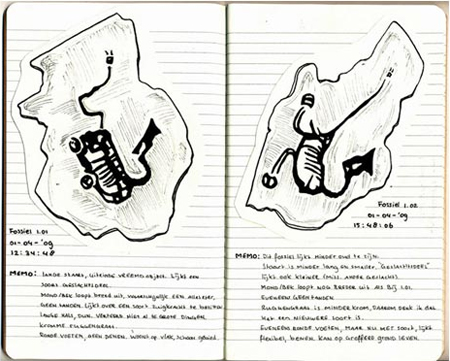
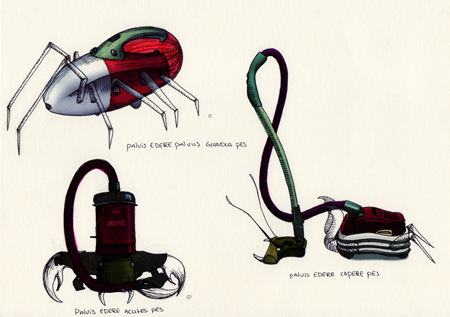
Like an old fashioned explorer Charley Reijnders wondered around on her self invented ‘Island of Products’ where a remarkable evolution took place after the disappearance of their human creators. Without any interference the new mechanical species evolved from the discarded mass consumer products of a long gone past. In a sketchbook she tried to capture all this new marvels of evolution.
According to Ray Kurzweil, the line between humans and machines will blur as machines attain human-level intelligence and humans start upgrading themselves with cybernetic implants. These implants will greatly enhance human cognitive and physical abilities, and allow direct interface between humans and machines.
‘Once life takes hold on a planet, we can consider the emergence of technology as inevitable. The ability to expand the reach of one’s physical capabilities, not to mention mental facilities, through technology is clearly useful for survival. Technology has enabled our subspecies to dominate its ecological niche. Technology requires two attributes of its creator: intelligence and the physical ability to manipulate the environment. This ability to use limited resources optimally, is inherently useful for survival, so it is favored. The ability to manipulate the environment is also useful; otherwise an organism is at the mercy of its environment for safety, food, and the satisfaction of its other needs. Sooner or later, an organism is bound to emerge with both attributes.
As technology is the continuation of evolution by other means, it shares the phenomenon of an exponentially quickening pace. The word is derived from the Greek tekhn¯e, which means “craft” or “art,” and logia, which means “the study of.” Thus one interpretation of technology is the study of crafting, in which crafting refers to the shaping of resources for a practical purpose.’ (abstract of Ray Kurzweils ‘The Age of Spiritual Machines’)
When a scientist states that something is possible, he is almost certainly right. When he states that something is impossible, he is very probably wrong. The only way of discovering the limits of the possible is to venture a little way past them into the impossible. Any sufficiently advanced technology is indistinguishable from magic.
— Arthur C. Clarke’s three laws of technology
Posted in Cryptozoology, Taxonomy, Visual Arts | Reacties uitgeschakeld voor Technological Evolution
november 8th, 2010
Rinus Van de Velde
Physical Items Themselves Are Not Evidence, 2009
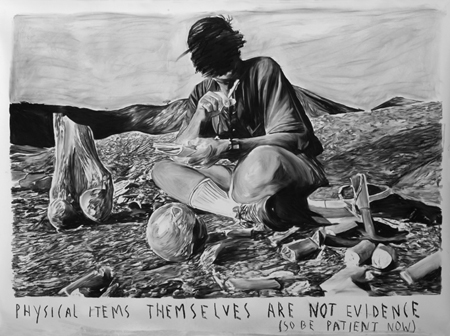
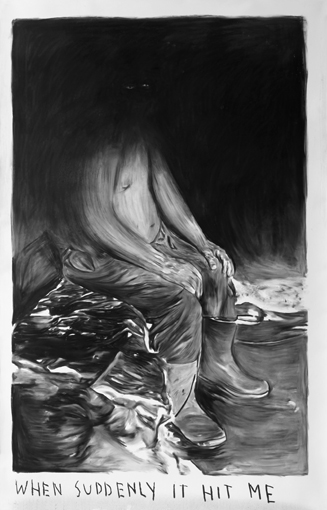
Rinus Van de Velde uses signs as a means to put a recalcitrant reality in order. His starting point is shaped through the world of photographic representation. Having an extensive personal archive of images ranging from (semi)scientific magazines such as the National Geographic to biographies of artists and scientists, these images form a rich source for series of drawings in which the source material is still recognizably present. The resemblance between all these pictures is not so much what they show but how they show it. By using the photographs as material for a drawing and by situating it in a different context by adding text, Van de Velde ignores the facts and creates space to tell a personal story. The aim isn’t to tell the reality behind the photo but to create third degree myth. Many of the photographs that Van de Velde references are part of an ideology that isn’t completely right or which hasn’t survived the test of time: like the deep rooted faith in the myth of the artist as authentic or autonomous, scientific progress or paternal exotism. Instead of dismantling, Van de Velde weaves through text and reciprocally references a new story. The result is a sort of mirror-universe, inhabited by brave alter-egos that map the world around them and function as ideal representatives of the actual artist.
When Suddenly It Hit Me, 2009
Maarten Vanden Eynde
Dip-Stick, 2005
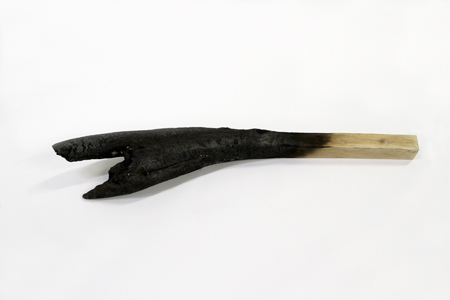
Small wooden sculpture, planed square on one side, the other is inflicted like a burned lump or black tumor, like a stick dipped in dark matter.
Posted in Cosmology, Pyrography, Visual Arts | Reacties uitgeschakeld voor When Suddenly It Hit Me
november 2nd, 2010
Tomás Saraceno
Iridescent Plant Medium with Lamp, 2009
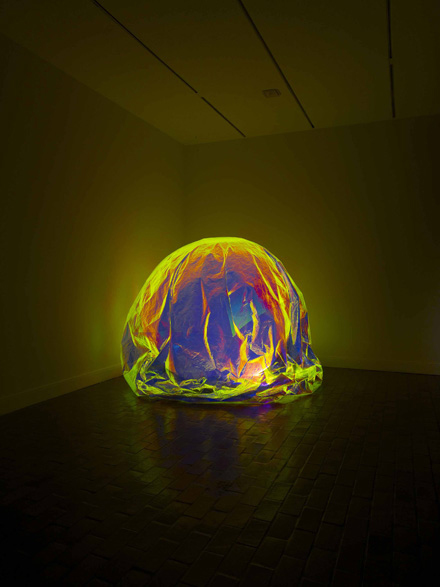
The luminous and roughly human-height Iridescent Plant Medium with Lamp consists of a sphere dressed in a billowing sheath of iridescent foil in a dark room. Thoroughly otherworldly, the orb shivers and cowers in the corner like a specimen from space. NASA, it should be noted, sent plants on early space missions and began experimenting with aeroponics in the late 1990s. One can imagine the possibility of future cosmic plantations, a vision clearly encouraged by Saraceno’s installation.- Based on a text by Erin Rouse –
Sunny Day, Air-Port-City, 2006
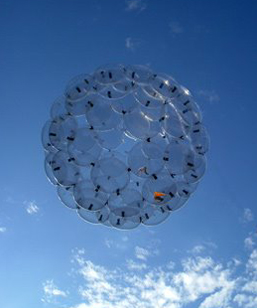
As an architect Saraceno has for years been looking into the possibility of using large balloon-like constructions to enable the free circulation of persons and goods across the entire globe.
Posted in Cosmology, Photobiology, Visual Arts | Reacties uitgeschakeld voor Air-Port-City
oktober 14th, 2010
Damián Ortega
Controller of the Universe, 2007
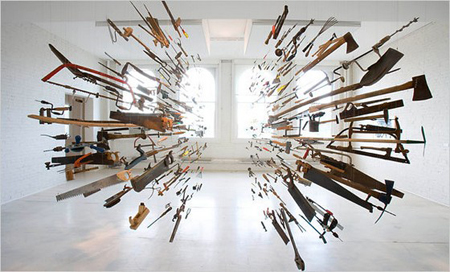
Damián Ortega’s Controller of the Universe, a series of found hand tools suspended in mid air, is a site of danger and otherworldliness. As if in mid explosion emanating from a center, it appears as though a force of nature has frozen them in time and space.
Cosmic Things, 2002
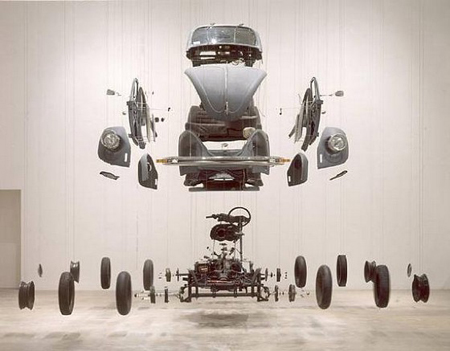
Posted in Archaeology, Cosmology, Taxonomy, Visual Arts | Reacties uitgeschakeld voor The Controller of the Universe
oktober 4th, 2010
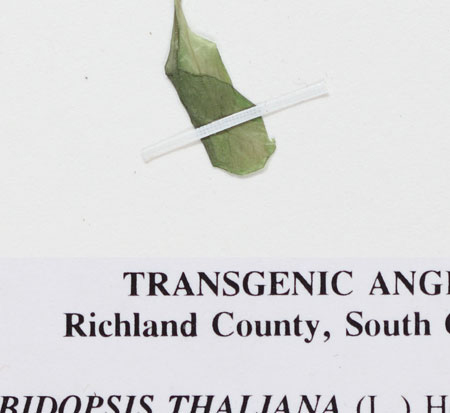
Arabidopsis thaliana is a small unremarkable plant found growing along roadsides, in fields and wastlands of the northern hemisphere. Its apparent simplicity and relatively quick growing cycle made is a good candidate for researchers studying genetics during the middle part of the 20th century. In the 1970′s Arabidopsis thaliana’s life and habitat changed rapidly. Researchers at Stanford University had developed a technique for using bacteria to insert foreign genes into the genome of Arabidopsis. In doing so, Arabidopsis become the first “transgenic” plant. With the advent of the commercial biotech industry in the 80′s, the familiar plant began taking up residence in climate controlled research labs all over the world. It is now considered one of the “standard model organisms” which scientists use to try and understand life, and engineers use to try to find new uses for life.
A single specimen of Transgenic Arabidopsis thaliana rests in the species’ “United States” collection folder in the botany collection at the Smithsonian. Wedge amidst its wilder relatives, it is an oddity amongst its closest kin, but also within the Museum of Natural History on the whole where it remains possibly the only genetically engineered specimen within the collection.
Source: The Center for PostNatural History
The Center for PostNatural History is dedicated to the advancement of knowledge relating to the complex interplay between culture, nature and biotechnology. The PostNatural refers to living organisms that have been altered through processes such as selective breeding or genetic engineering. The mission of the Center for PostNatural History is to acquire, interpret and provide access to a collection of living, preserved and documented organisms of postnatural origin.
Posted in Biology, Ecology, Genealogy | Reacties uitgeschakeld voor Transgenic Life found in the Smithsonian Institute
augustus 6th, 2010
Felix van de Beek
Little Architects, 1979 – 1981
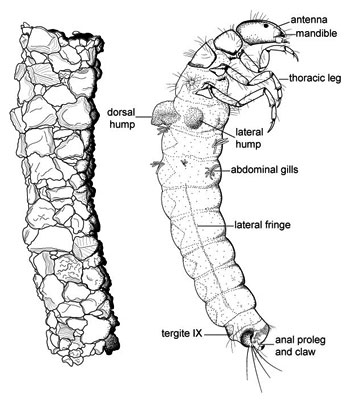
Caddisflies, aquatic insects of the order of Trichoptera are known all over the world. They are tiny nocturnal butterflies whose larvae feed on micro-organisms in non-polluted freshwater. In order to protect an extremely vulnerable abdomen, the larvae of a certain group constructs a portable case or tube consisting of mucus, bits of leaves, sand, etc. Mainly working in nightshifts it takes these one-centimeter-long little architects a week to complete their job. In natural surroundings the cases all look alike. This is not surprising as the material on hand differs very little. But what happens if the supply of stock is changed?
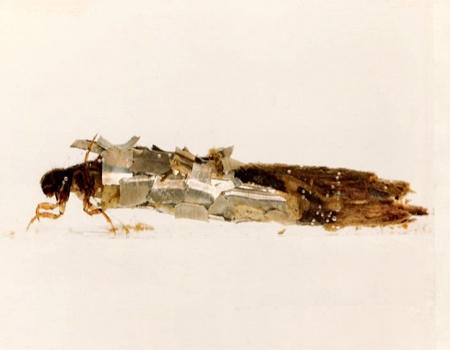
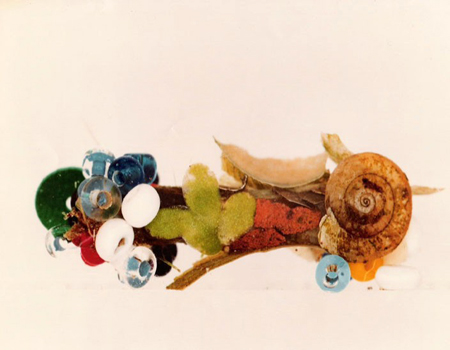
It presented no problem to the grubs. They used everything that was availeable, organic as well as inorganic: ironfilings, wood-chippings, beads, glass-splinters, bits of plastic and so on.
P.S. For the concerned animal lovers in the world: as for the larvae used in the project all flew happily out after the chrysalis stage
Based on a text by Pieter Beek
Posted in Ecology, Visual Arts, Zoology | Reacties uitgeschakeld voor Caddisfly Construstions
augustus 5th, 2010
Alexandra Daisy Ginsberg
A Natural History of the Synthetic Future, 2009
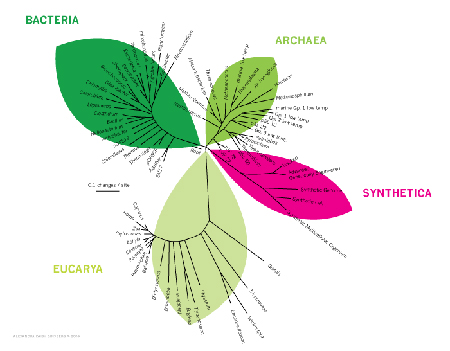
The New Tree of Life
How will we classify what is natural or unnatural when life is built from scratch? Synthetic Biology is turning to the living kingdoms for its materials library. No more petrochemicals: instead, pick a feature from an existing organism, locate its DNA code and insert it into a biological chassis. From DIY hacked bacteria to entirely artificial, corporate life-forms, engineered life will compute, produce energy, clean up pollution, make self-healing materials, kill pathogens and even do the housework. Manufacturers will transcend biomimicry, engineering bacteria to secrete keratin for sustainable vacuum cleaner casings; synthesise biodegradable gaskets from abalone shell proteins and fill photocopier toner cartridges with photosensitive E. coli. Meanwhile, we’ll have to add an extra branch to the Tree of Life. The Synthetic Kingdom is part of our new nature. Biotech promises us control over the natural world, but living machines need controlling. Biology doesn’t respect boundaries or patents. And in simplifying life to its molecular interactions, might we accidentally degrade our sense of self? Are promises of sustainability and unparalleled good health seductive enough to accept such compromise? – Alexandra Daisy Ginsberg
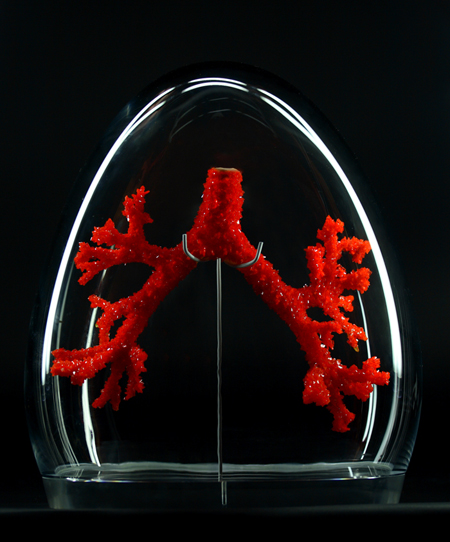
POLLUTION-SENSING LUNG TUMOR Terminal pathology from female smoker, 64 years of age. Analysis identified a novel species of silicon fabricator containing DNA from Japanese carbon monoxide detectors (manufacturer’s DNA tag intact). A double disease: her lungs grew carbon monoxide-sensing crystals in response to the presence of pollutants in her lungs.
Posted in Taxonomy, Visual Arts | Reacties uitgeschakeld voor The Synthetic Kingdom
juli 28th, 2010
France Cadet
Hunting Trophies, 2008
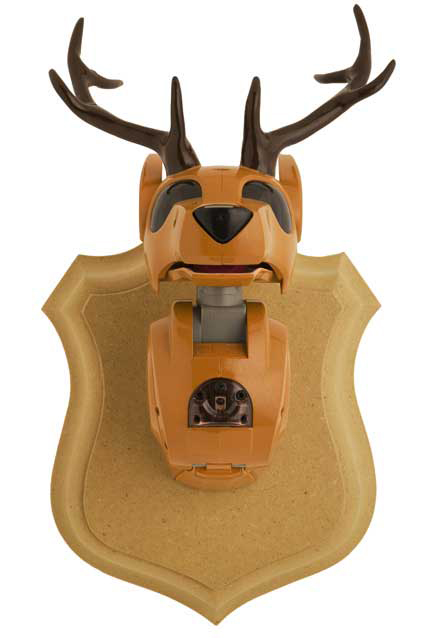
Cervus Elaphus Barbarus (North Africa Deer)
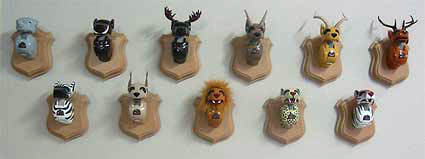
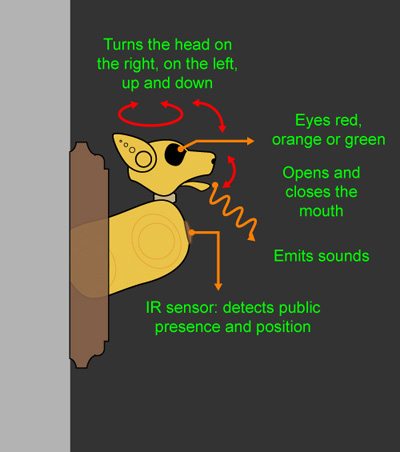
Hunting Trophies is a collection of 11 hunting trophies hung on the wall. They feature the most frequent species used in taxidermy for the realization of wall trophies, mainly deer and cat family. Instead of being real taxidermied animals they are chests of modified I-Cybie robots. An infrared sensor allows the robots, each in its own way, to detect the presence but also the movements of visitors. As you approach, the robots turn their heads in your direction, their eyes light up, come too close and the robot suddenly growls. The closer you get, the more aggressive its behaviour.
Posted in Genealogy, Taxonomy, Visual Arts, Zoology | Reacties uitgeschakeld voor Interactive Hunting Trophies
april 11th, 2010
Bob de Graaf
On the Crossing of Species, 2010
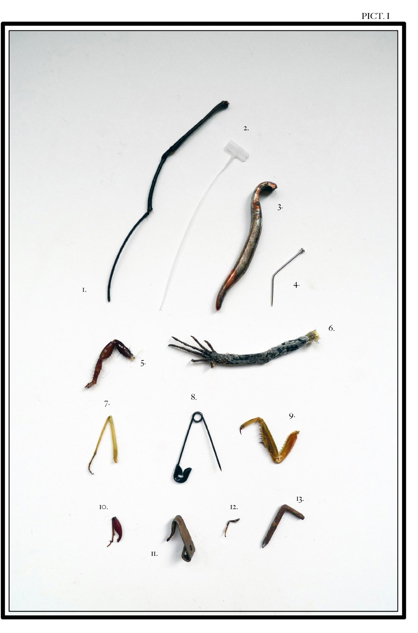
Limbs
1. SPIDER’S LEG
2. POLYCARBONATE PRICE HOLDER
3. IRON HOOK
4. BEND NAIL
5. SCORPION’S LEG
6. LIZARD’S LEG
7. GRASSHOPPER’S LEG
8. SAFETY PIN
9. PRAYING MANTIS FRONT LEG
10. FIREBUG’S LEG
11. FRAME HOLDER
12. LADYBUG’S LEG
13. IRON HOOKNAIL
Bob de Graaf made a catalogue of different parts of animals and objects which he found in his surroundings.
‘My collection can be used to create a new order of species. By using the natural lifecycle of animals in everyday objects an evolutionary up-cycle can replace linear production systems. By breeding animal-like objects or object-like animals, we can construct a practical class of species.’
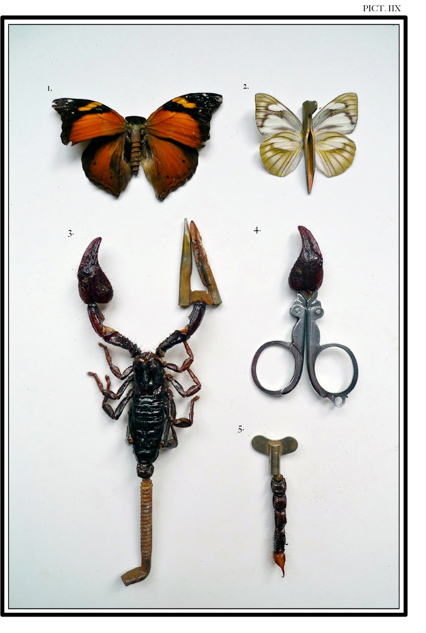
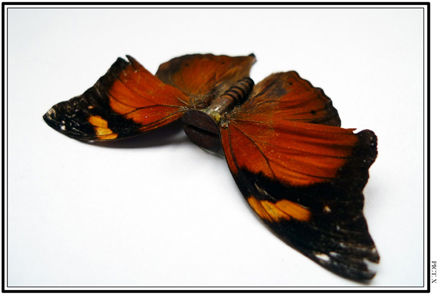
Vanescrew (Synthia) Slotta, 2010
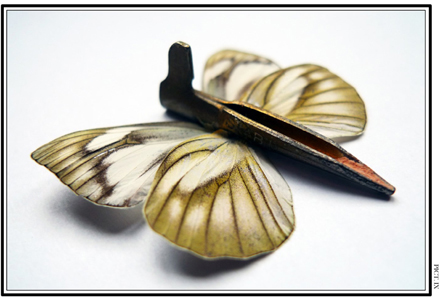
Pieron (Artogeia) Napil, 2010
Posted in Genealogy, Visual Arts, Zoology | Reacties uitgeschakeld voor The New World Order
maart 19th, 2010
Alexandra Daisy Ginsberg (with Sascha Pohflepp)
Growth Assembly, 2009
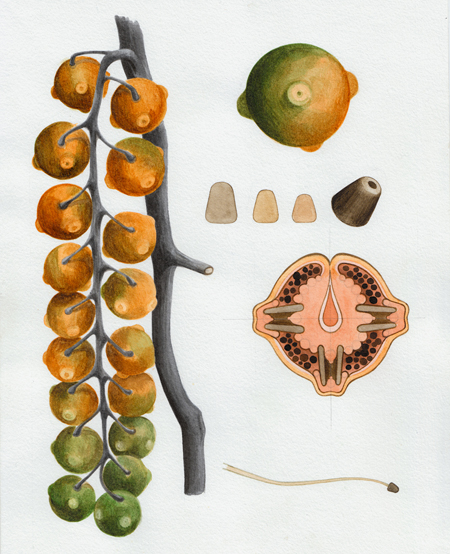
Herbicide Sprayer (Nozzle Fruit)
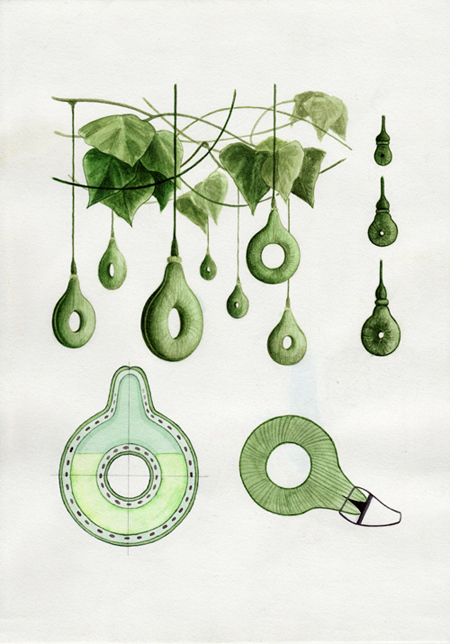
Herbicide Gourd
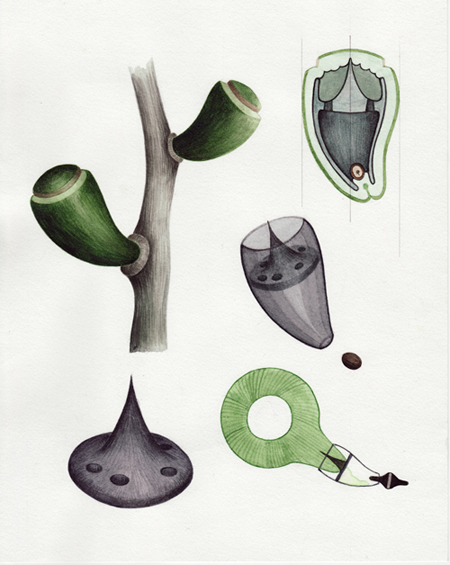
Spike
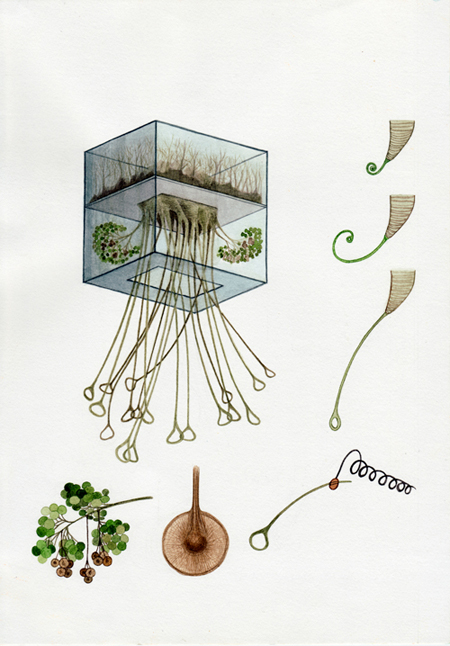
Handle
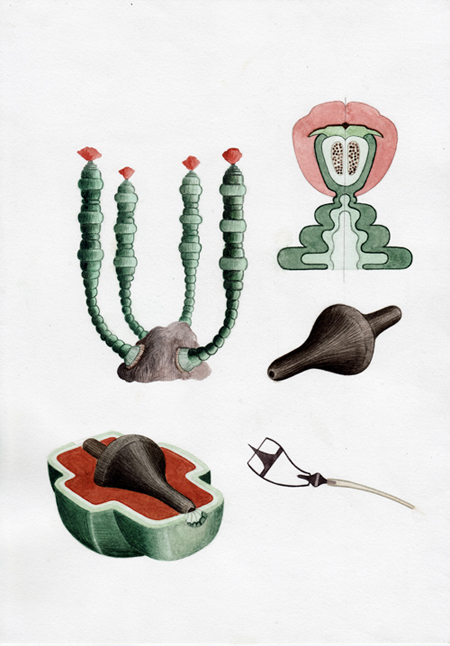
Connector
After the cost of energy had made global shipping of raw materials and packaged goods unimaginable, only the rich could afford traditional, mass-produced commodities.
Synthetic biology enabled us to harness our natural environment for the production of things. Coded into the DNA of a plant, product parts grow within the supporting system of the plant’s structure. When fully developed, they are stripped like a walnut from its shell or corn from its husk, ready for assembly.
Shops have evolved into factory farms as licensed products are grown where sold. Large items take time to grow and are more expensive while small ones are more affordable. The postal service delivers lightweight seed-packets for domestic manufacturers.
Using biology for the production of consumer goods has reversed the idea of industrial standards, introducing diversity and softness into a realm that once was dominated by heavy manufacturing.
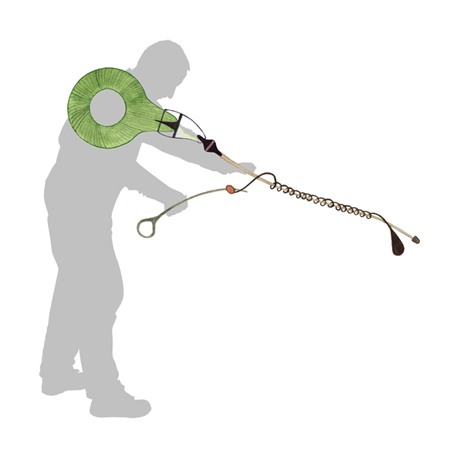
The product shown here is the Herbicide Sprayer, an essential commodity used to protect delicate engineered horticultural machines from older nature.
Posted in Biology, Visual Arts | Reacties uitgeschakeld voor GIY (Grow It Yourself)
maart 10th, 2010
Hester Oerlemans
Modern Fossils in asphalt, 2003

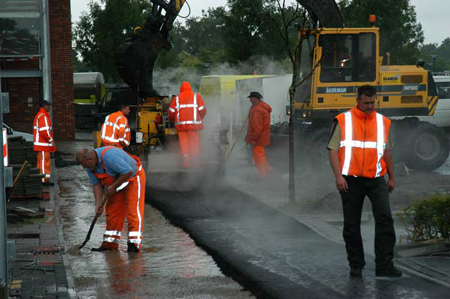
Recognisable objects like a wind rose, a mobile phone, a key, a pair of scissors, a safety pin, a ring and also words and poems were rolled into the still hot asphalt of the constructed footpath. They are ‘modern fossils’ that carry the past with them in a playful way. Hester Oerlemans collected these ‘fossils’ together with the residents and personnel of nursing home ’t Laar and had them placed over the entire stretch of the two hundred meter long footpath, connecting the new and the old part of nursing home ’t Laar.
Posted in Archaeology, Geography, Paleontology | Reacties uitgeschakeld voor Modern Fossils